ESIT 2026
Earth & Space:from Infrared to Terahertz International Conference 2026
September 18 - 20, 2026
Shanghai, China

Tawfique Hasan
University of Cambridge, Britain
Title: Miniaturised Computational Light Detection
Abstract:
Optical instruments are usually judged by how much information they can separate, resolve and measure. Conventional systems achieve this through carefully arranged optical components, including lenses, filters, gratings and scanning elements. Miniaturised light-field detectors and spectrometers challenge this model. By replacing part of the optical complexity with engineered materials, device physics and computational reconstruction, they offer a route towards compact instruments that can measure rich optical information outside the controlled environment of the laboratory.
In this talk, I will discuss this emerging design philosophy for miniaturised computational light detection, with a focus on the visible regime. The central idea is to use constrained hardware not as a limitation, but as a physical encoder of optical information. Computation is then used to reconstruct the underlying spectral, spatial or other light-field content from the resulting measurements. This approach shifts the emphasis from simply shrinking conventional instruments to co-designing the material response, device architecture and reconstruction algorithm. In doing so, it points towards optical systems that are not only smaller, but also more manufacturable, task-specific and suitable for real-world sensing and portable spectroscopy.
Biography:
Tawfique Hasan is Professor of NanoEngineering in the Department of Engineering at the University of Cambridge. His research group develops nanomaterials, printable electronics, optoelectronic devices and computational sensing systems. His work spans gas sensors, tactile sensors, flexible and recyclable electronics, photodetectors and miniaturised computational spectrometers, with a central interest in structuring materials and device architectures, then using computation to extract information from complex electrical and optical responses.
Tawfique is an Editor of Advanced Photonics, has served as a Distinguished Lecturer of the IEEE Photonics Society and is a Fellow of Optica.
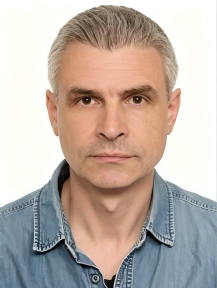
Piotr Martyniuk
Military University of Technology, Poland
Title: Cascade structures for single and multi-pixels IR detectors
Abstract:
This talk presents the current status and future prospect of the InAs/InAsSb T2SLs ICIPs and MCT PVMs designed to operate at HOT conditions as a single pixel devices and arrays. The design of the device resolves the problem of the low QE of the traditional “thick absorber” of the photovoltaic detectors optimized for HOT conditions. The cascade devices are seen to exhibit a performance potential in MWIR/LWIR/VLWIR ranges circumventing the problems of the short carrier diffusion length at HOT (even > 300 K) conditions.
Piotr Martyniuk has been a professor at the Institute of Applied Physics (IAP), Military University of Technology (MUT) in Warsaw, Poland. The main subjects of his research are AIIBVI-HgCdTe, AIIIBV InAsSb, type-II superlattice InAs/GaSb, InAs/InAsSb IR detectors and 2D materials (“new wave materials”). He authored or co-authored over 200 reviewed journal papers and conference publications. In addition he co-authored three monographs: “Antimonide-based infrared detectors: a new perspective” and “Room Temperature Photon Detectors” and “Infrared detectors – Status and Outlook” on IR detectors. He closely collaborates with industry to include: VIGO Photonics S.A. and Photin sp. Z O.O. In addition, closely cooperates with the KIND Lab at Ohio State University (OSU), the Microelectronics Research Group at the University of Western Australia (UWA) and Shanghai Institute of Technical Physics (SITP), Chinese Academy of Science. He received an award from the Polish Academy of Science—Dean of Division Four: Engineering Sciences for his study “Barrier IR detectors as a new generation HOT sensors”. He also received an award from the Minister of Defense (President of Republic of Poland honorable patronage) for the best completed project within the defense area “HOT IR detectors with short response time”. In 2021, he received a 10-month Fulbright scholarship to the OSU KIND Laboratory. He was visiting professor at Shanghai Institute of Technical Physics (SITP), where he was dealing with avalanche photodiodes and single-photon detectors (2022-2024).
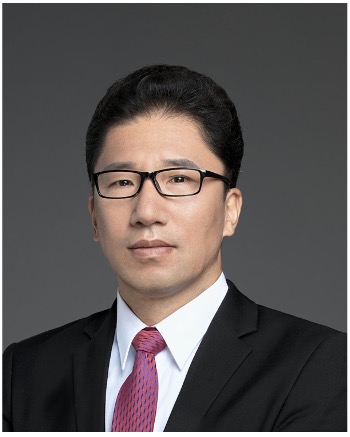
Hongbo Sun
Tsinghua University, China
Title: From Visible to Terahertz Detection: Device Innovation Driven by Laser Precision Manufacturing
Abstract:
Ultrafast laser micro/nano processing offers unique capabilities including high precision, low thermal damage, and cross‑material fabrication, enabling us to tailor functional device structures for detection needs across different frequency bands. In the visible range, we have fabricated highly sensitive low‑light‑level and night‑vision detectors, which effectively enhance the capture of weak optical signals. In the infrared band, we employed this technique to produce blackbody structures with high absorptivity, providing a stable and reliable calibration reference for infrared systems. For microwave field detection, we developed an integrated Rydberg atom‑based field sensing chip, where the atomic vapor cell and optical path are monolithically integrated, significantly improving system stability and portability; this technical approach can be directly extended to the terahertz regime. Our series of works demonstrate that ultrafast laser micro/nano processing serves as a unified, integrable technological platform supporting cross‑band detection from visible light to terahertz frequencies.
Biography:
Hong-Bo Sun received BS/PhD degrees in electronics from Jilin University, China, in 1992/1996. He worked as postdoctoral researcher at the University of Tokushima (1996-2000), assistant professor at Osaka University (2000-2006), Changjiang professor at Jilin University (2006-2017) and Tsinghua University since 2017. His research interest is ultrafast laser manufacturing. So far, he has published over 600 papers in above fields, which are cited for 51000+ times, and H factor is 118, according to Googlescholar. He is CAS academician, IEEE, OSA, SPIE, COS and CSOE fellow, editor-in-chief of PhotoniX, and executive editor-in-chief of Light Science and Applications.
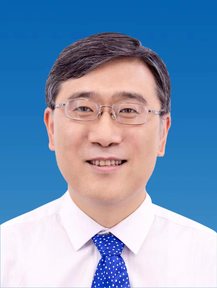
Lei Zhou
Fudan University, China
Title: Metasurfaces for Controlling Light: From Interfacial Phases to Flat Optics
Abstract:
Metasurfaces are ultra-thin metamaterials composed by artificial planar meta-atoms arranged in some specific macroscopic orders, which exhibit extraordinary capabilities to control light waves. In this talk, I will give a brief overview on the historical development of metasurfaces, starting from the concept of “Interfacial phases” to the establishment of flat optics, focusing particularly on recent development of using metasurfaces ro generating and controlling vectorial light fields.
Biography:
Zhou, Lei received his PhD in Physics from Fudan University, Shanghai, China, in 1997. He then went to Institute for Material Research in Tohoku University and the Hong Kong University of Science and Technology for postdoctoral research. He joined Physics Department of Fudan University in 2004, is now Vice President of Fudan University. He got the NSFC "Grant for Outstanding Young Scientist" in 2007 and was entitled "Chang Jiang Scholars Program" Chair Professor in 2010. He was an elected Fellow of OPTICA (2019), APS (2024) and COS (2024), a co-editor-in-chief of Photonics Insights and Optics and Photonics Research. He got many prestigious awards including the highly competitive National Natural Science Award of China (second class, 2019). He has published over 250 papers in journals such as Nature Materials and Nature Nanotechnology, was cited by over 27000 times (Google Scholar), and was a Clarivate world-wide Highly Cited Researcher in 2019-2024.

Fudan University

Shanghai Institute of Technical Physics, Chinese Academy of Sciences

Institute of Optoelectronics, Fudan University

State Key Laboratory of Infrared Physics, Shanghai Institute of Technical Physics, CAS
